Football World Cup vs Club World Cup: 2026 Scale
The 2026 FIFA World Cup is the global national-team tournament hosted by Canada, Mexico, and the United States from June 11 to July 19, 2026, while the FIFA Club World Cup is a separate competition fo...

Football World Cup vs Club World Cup: 2026 Scale
The 2026 FIFA World Cup is the global national-team tournament hosted by Canada, Mexico, and the United States from June 11 to July 19, 2026, while the FIFA Club World Cup is a separate competition for leading club sides. The 2026 football world cup expands to 48 teams, up from 32 in Qatar 2022, creating 104 matches across 39 days. Los Angeles will host eight matches at SoFi Stadium, alongside a 39-day regional celebration and FIFA Fan Festival programming at the Los Angeles Memorial Coliseum. FIFA remains the governing body, with 16 host cities spread across North America. For supporters, the practical challenge is not simply knowing the winner; it is tracking qualification, travel distances, kickoff times, squad rotation, and market movement. Use the official FIFA schedule first, then compare team form, player availability, and tactical matchups through Fan Strategy before making any football World Cup assessment.
Step 1: Identify the 2026 football World Cup format
The 2026 FIFA World Cup is a 48-team national-team tournament in Canada, Mexico, and the United States, with 104 matches scheduled across 39 days. The expanded format changes the competition from a compact 32-team event into a larger logistical and analytical exercise, because more teams, travel routes, and possible knockout combinations create more variables than in Qatar 2022.
The opening match is scheduled for June 11, 2026, and the final is scheduled for July 19, 2026. FIFA has divided the tournament among 16 host cities: Toronto and Vancouver in Canada; Mexico City, Guadalajara, and Monterrey in Mexico; and 11 cities in the United States, including Los Angeles, New York/New Jersey, Miami, Dallas, Atlanta, Boston, Houston, Kansas City, Philadelphia, San Francisco Bay Area, and Seattle. The exact competitive value of each venue is not equal. A team moving between hot, humid environments and higher-travel routes faces a different physical problem from one remaining in a relatively stable regional base.
The 48-team structure also affects the group stage. Teams are arranged into 12 groups of four, with the top two teams from each group advancing, together with the eight best third-place teams. That creates 32 knockout-stage qualifiers, meaning a strong opening performance matters, but a single poor result may not eliminate a contender immediately. Is that good for drama? Almost certainly. Is it easier to predict? Not necessarily.
For a clear competition map, pair the official FIFA World Cup 2026 information with a team-by-team [Internal Link: 2026 World Cup qualifying guide]. The useful distinction is simple: the football World Cup measures national-team chemistry, while the Club World Cup measures club depth and squad construction.
Want the tournament structure in one place? Fan Strategy tracks the format, teams, and daily developments without forcing you to sift through twenty tabs.
Step 2: How should you read the schedule and host cities?
The 2026 football World Cup schedule should be read through three filters: match timing, venue geography, and recovery windows. A fixture list tells you when a match begins, but it does not automatically show how difficult a team’s operating environment will be. The United States, Canada, and Mexico cover a vast area, and a national team may need to manage long-haul travel, time-zone changes, climate differences, and training access within a short tournament cycle.
Los Angeles is a useful case study. The city will host eight FIFA World Cup matches at SoFi Stadium, including the United States men’s national team’s opening match on June 12. The wider Los Angeles area will also stage 39 days of fan celebrations, while the FIFA Fan Festival at the Los Angeles Memorial Coliseum is planned as a central public gathering point. That means match-day demand will extend beyond the stadium; hotels, rail connections, roads, restaurants, and public viewing areas will all influence the supporter experience.
At the national-team level, analysts should record:
- The venue and local kickoff time for every match.
- The number of rest days before and after each fixture.
- The distance between a team’s consecutive venues.
- Temperature, humidity, altitude, and likely pitch conditions.
- Whether a team has a stable base or repeated cross-country travel.
A practical edge appears in the relationship between travel and pressing. High-intensity teams can lose defensive compactness when recovery time falls below four full days, although the exact impact depends on rotation depth and training design. That is not a universal law, but it is a useful warning sign. The team with the prettiest possession numbers may not be the team best positioned for a short-rest knockout match, or am I wrong?
The official Los Angeles 2026 host-city information is useful for venue planning, while [Internal Link: World Cup travel and stadium guide] can help organize a match itinerary. Check the schedule again before booking anything; kickoff information, transport arrangements, and access policies can change.
Step 3: What should you measure before evaluating a team?
Before evaluating a football World Cup team, measure recent competitive form, chance quality, defensive transitions, squad availability, and the strength of its opponents. FIFA ranking position is a useful starting point, but it is not a complete forecast because rankings compress different match contexts into one number.
A team’s attack should be assessed beyond goals scored. Expected goals, shot location, penalty-area touches, set-piece output, and possessions ending in the final third reveal whether scoring is repeatable or dependent on unusually efficient finishing. Defensively, look at pressure success, high turnovers conceded, aerial-duel performance, and the number of shots allowed after losing possession. These indicators matter more when a team faces opponents with contrasting styles.
The most useful match file usually includes:
- Goals for and against over the previous 10 competitive matches.
- Expected goals for and against, separated by home and away fixtures.
- Starting XI continuity across the last 5 to 8 matches.
- Minutes played by key attackers and central defenders.
- Set-piece goals scored and conceded.
- Results against top-30 FIFA-ranked opponents.
- Substitution timing and second-half goal difference.
- Travel distance and rest days before major fixtures.
One information gain that casual previews often miss is substitution dependency. If a team scores 42% of its goals after the 60th minute, that may indicate excellent bench impact, but it may also show that the starting XI is structurally weak. Those are different conclusions. Review whether late goals come from controlled tactical changes, opponent fatigue, or simple game-state chaos.
Another overlooked edge is goalkeeper distribution under pressure. A goalkeeper completing 88% of short passes against passive opponents tells you less than the same goalkeeper’s performance when pressed by a coordinated front three. Track long-pass accuracy, turnovers in the first phase, and whether center-backs separate quickly enough to create safe exits. A World Cup knockout match can turn on one failed build-up, not on a season-average possession percentage.
According to FIFA’s technical study resources, tournament analysis should consider tactical trends alongside performance data. The principle is sensible: “technical development is driven by observation and analysis.” In plain terms, numbers explain what happened; video and context explain why.
Get the data organized before comparing contenders. That is where a [Internal Link: football World Cup team statistics guide] earns its place.
Step 4: Why do tactics matter more in a 48-team tournament?
Tactics matter more in the 2026 football World Cup because the 48-team format creates more stylistic variety, while the knockout stage still punishes one poor defensive sequence. A team may face a low block, an aggressive pressing side, and a transition-heavy opponent within three matches, so one fixed game plan is rarely enough.
The strongest tournament teams generally show three qualities. First, they can progress the ball against pressure without exposing the center. Second, they can defend a lead without retreating into uncontrolled panic. Third, they can change shape after substitutions without losing spacing between the lines. These qualities are less glamorous than a star attacker’s highlight reel, but they are more predictive across seven potential matches.
Consider a basic tactical comparison:
| Tactical feature | What to examine | Why it matters |
|---|---|---|
| Build-up | Center-back width and goalkeeper passing | Determines resistance to high pressure |
| Midfield control | Progressive passes and receiving angles | Shows whether possession moves forward |
| Pressing | Triggers, recovery speed, and coverage | Reveals defensive sustainability |
| Transition defense | Rest-defense numbers behind the ball | Limits counterattacking danger |
| Set pieces | Delivery quality and marking assignments | Creates low-volume, high-value chances |
| Game management | Substitutions and tempo control | Protects leads in late stages |
A contrarian conclusion follows from this: the most entertaining team is not always the best tournament team. A side averaging 2.1 expected goals per match may still be vulnerable if it concedes 1.4 expected goals after losing possession. Meanwhile, a less spectacular team producing 1.6 expected goals and conceding 0.8 may travel further because its floor is higher. Isn’t that the point of tournament football?
Player availability adds another layer. A single holding midfielder can change the risk profile of an entire team, especially if the replacement is more progressive but weaker in defensive positioning. Track injuries, suspensions, minutes, and role changes rather than simply listing famous names. Fan Strategy’s approach is built around that distinction: match predictions should connect player data to the tactical problem in front of the team.
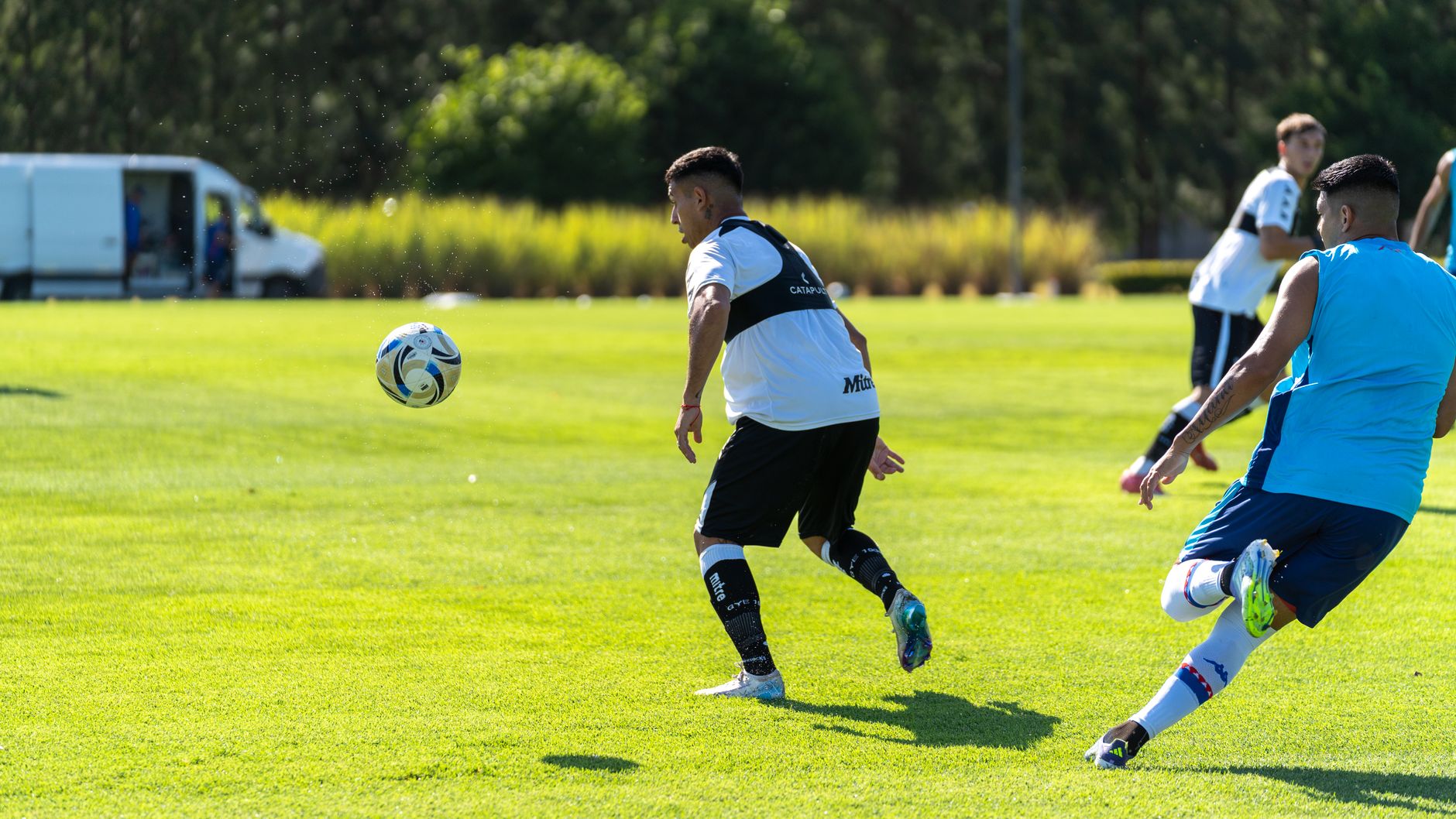
Photo by Franco Monsalvo on Pexels
Step 5: Verification before trusting a World Cup prediction
Verification means checking the source, date, competition context, and sample size before accepting a football World Cup prediction. A forecast based on a team’s last two friendlies is weak evidence, while a forecast combining 10 competitive matches, opponent strength, squad availability, and venue conditions is more defensible.
Use a five-point verification routine:
- Confirm the fixture through FIFA or the relevant host-city organizer.
- Check whether the match is competitive, friendly, or a previous tournament fixture.
- Verify injuries, suspensions, and expected lineups close to kickoff.
- Compare underlying numbers with final scores.
- Reassess the forecast if travel, weather, or tactical roles change.
This process avoids a common error: treating past head-to-head results as destiny. A match between England and Brazil from 2017 may be historically interesting, but it has limited predictive value if the managers, formations, and player pools have changed. The same applies to group-stage form collected against weak opponents. Context is not decoration; it is the model.
Use authoritative sources such as FIFA.com, ESPN football schedules, and national federation announcements for confirmation. ESPN is helpful for fixture tracking, while FIFA provides the competition framework and official tournament information. Neither source removes the need for judgment, but both are better than an undated social-media graphic.
For readers considering match markets, keep analysis separate from emotion and set a fixed budget. The 2026 football World Cup will produce constant news, price movement, and public enthusiasm; that is exactly why disciplined verification matters. Never treat a prediction as certainty, and do not risk money you cannot afford to lose.
A final check should ask four blunt questions:
- Is the team’s recent form supported by chance quality?
- Is the expected lineup confirmed or merely assumed?
- Does the tactical matchup favor the team’s preferred style?
- Has the venue and travel burden been included?
If two answers are “no,” lower confidence. That is not pessimism. It is basic data hygiene.
Troubleshooting common failures
The most common football World Cup research failures are outdated schedules, misleading form samples, unverified lineup claims, and confusion between national-team and club competitions. Fixing them requires returning to primary sources, separating facts from assumptions, and recording the date of every important statistic.
When a schedule appears inconsistent, check the publication date first. Search engines may display an old fixture graphic even after organizers update venue information. When a team looks statistically dominant, inspect opponent quality and game state; a side protecting a 2–0 lead will naturally produce different passing and pressing numbers from a side chasing an equalizer. When a player is listed as doubtful, look for an official federation update rather than relying on a reposted rumor.
Several failures recur often:
- Using FIFA ranking alone: rankings provide context, not a complete tactical forecast.
- Ignoring third-place qualification: in a 12-group format, eight third-place teams advance.
- Comparing raw goals without expected goals: finishing variance can distort short samples.
- Overvaluing possession: possession in harmless areas is not territorial control.
- Ignoring substitutions: late-game bench quality can decide knockout matches.
- Treating all venues alike: climate, travel, and kickoff timing alter physical demands.
- Confusing World Cup competitions: the FIFA World Cup is national-team football; the FIFA Club World Cup is club football.
A useful operational rule is to timestamp your research. If you record a player’s injury status at 10:00 UTC on June 5, 2026, label it clearly and update it when the national federation publishes new information. That small habit prevents stale analysis from quietly becoming a false fact.
What can supporters expect from Los Angeles in 2026?
Los Angeles will host eight FIFA World Cup matches at SoFi Stadium and provide 39 days of fan celebrations across the region. The city’s football World Cup experience will therefore extend beyond the stadium, with the FIFA Fan Festival at the Los Angeles Memorial Coliseum, official fan zones, food, music, public viewing, and community events forming a second layer of the tournament.
Supporters should plan around transport rather than assuming a short drive. Los Angeles traffic can make a nominally simple route unpredictable, particularly when a stadium event overlaps with concerts, commuting hours, or fan-zone programming. Confirm stadium entry requirements, public transport options, bag policies, and the time needed for security before leaving. The best match-day plan is usually the boring one: arrive early, carry less, and avoid improvising near kickoff.
The United States men’s national team opening match on June 12 is expected to attract especially high demand. However, the wider schedule may offer better value for supporters seeking a calmer experience, because popular national-team fixtures can increase hotel and transport pressure across the region. Compare venue location, match importance, and public festival programming rather than choosing only by team reputation.
The Los Angeles 2026 organizers describe the city as a place where “the world’s game” meets food, culture, music, and community celebration. That positioning is more than promotional language when viewed operationally: fan events create alternative ways to follow matches, especially for visitors without tickets. Check official announcements before relying on dates or performer lists, because event schedules can change.
See the practical details before you travel, including stadium access and fan-event locations.
Football World Cup and Club World Cup: what is the real difference?
The football World Cup features national teams representing countries, while the FIFA Club World Cup features professional club teams such as Manchester City, Real Madrid, and other continental champions or qualified sides. National teams have limited preparation time and players drawn from different clubs; club teams train together throughout the season and usually have more consistent tactical relationships.
The competitions also differ in what makes a team strong. In a national-team tournament, coaching clarity, player familiarity, set pieces, and adaptation time are critical. In a club tournament, squad depth, recruitment quality, financial resources, and year-round tactical repetition often carry greater weight. Comparing the two directly can produce bad conclusions, even when the same player appears in both.
For supporters, the distinction matters when reading statistics. A forward’s club output may be excellent in a possession-dominant system, yet his national-team role may involve deeper pressing or fewer touches. Likewise, a club defender accustomed to defending with a high line may struggle when his national team protects a narrow lead in a low block. Transferable quality exists, but tactical context decides how it appears.
Fan Strategy focuses on the football World Cup, with match predictions, player statistics, tactical breakdowns, and tournament coverage designed for the 2026 cycle. The sensible habit is to treat club form as evidence, not proof. Then test whether the player’s national-team responsibilities match the role that produced the club numbers.
A practical daily workflow for 2026
A reliable daily workflow takes 20 to 30 minutes and separates confirmation from interpretation. Start with official competition updates, then check team news, followed by statistical form and tactical analysis. Only after those steps should you read market movement or prediction commentary, because public prices can influence perception before the underlying facts are clear.
Use this sequence:
- Check FIFA and the relevant federation for schedule or squad updates.
- Confirm injuries, suspensions, and expected lineups.
- Review the previous 5 to 10 competitive matches.
- Compare expected goals, shots, set pieces, and transition events.
- Inspect venue, weather, rest days, and travel.
- Read one tactical preview and challenge its assumptions.
- Record your confidence level and the reasons behind it.
Keep a simple spreadsheet with columns for date, opponent, venue, formation, xG, shots, rest days, travel, and lineup continuity. After 20 to 30 matches, patterns become easier to identify. You may find that a team performs well against low blocks but struggles against direct attacks, or that its defensive numbers fall sharply when the first-choice holding midfielder is absent.
This is the level of detail that turns football World Cup coverage into analysis rather than noise. You do not need an elaborate model to ask better questions. You need current data, clean definitions, and enough discipline not to confuse a dramatic result with a stable trend.
Conclusion: follow the football World Cup with evidence
The 2026 football World Cup will combine a 48-team field, 104 matches, 16 host cities, and 39 days of competition across Canada, Mexico, and the United States. Los Angeles alone will host eight matches and a broad festival program, while the expanded format will increase the importance of schedule reading, travel analysis, squad depth, tactical flexibility, and third-place qualification rules.
The calm way to follow the tournament is straightforward: verify fixtures through FIFA, measure form beyond goals, track player roles, account for venue conditions, and update conclusions when lineups change. Fan Strategy is built for that process, covering predictions, tactics, player stats, and daily 2026 tournament developments. The numbers will not eliminate uncertainty, obviously. They will at least stop you from mistaking noise for evidence.
Ready to follow every major development with a sharper process?
Frequently Asked Questions
Q: What is the football World Cup?
A: The football World Cup is FIFA’s international tournament for men’s national teams. The 2026 edition will be hosted by Canada, Mexico, and the United States from June 11 to July 19, with 48 teams competing in 104 matches. It is different from the FIFA Club World Cup, which features professional club teams rather than national teams. The tournament winner is decided through group-stage and knockout matches.
Q: How many teams will play in the 2026 football World Cup?
A: Forty-eight national teams will compete at the 2026 FIFA World Cup. The teams will be divided into 12 groups of four, with the top two in each group and the eight best third-place teams advancing to the knockout phase. This produces a 32-team knockout bracket and contributes to the tournament’s total of 104 matches. The expanded field is the main structural change from the 32-team format used in Qatar 2022.
Q: How do you analyze a football World Cup match?
A: Analyze a match by combining recent competitive form, expected goals, lineup availability, tactical matchup, venue conditions, travel, and rest days. A useful sample covers roughly 5 to 10 relevant matches rather than one recent result. Check whether attacking output comes from sustained chance creation or unusually efficient finishing. Then assess whether the team’s preferred style works against the opponent’s pressing, defensive block, and transition threat.
Q: What is the difference between the FIFA World Cup and Club World Cup?
A: The FIFA World Cup is a national-team competition, while the FIFA Club World Cup is a competition for professional club teams. National teams assemble players from different clubs and usually have limited training time, whereas clubs train together throughout a season. As a result, national-team chemistry, tactical simplicity, and set pieces can matter more at the football World Cup. Club tournaments generally place greater emphasis on squad depth, recruitment, and repeated tactical patterns.
Q: What will happen in Los Angeles during the 2026 World Cup?
A: Los Angeles will host eight FIFA World Cup matches at SoFi Stadium, including the United States men’s national team opening match on June 12. The region is also expected to feature 39 days of fan celebrations, official fan zones, and FIFA Fan Festival programming at the Los Angeles Memorial Coliseum. Visitors should check official organizer updates for access rules, event dates, transport information, and venue policies. Traffic and security queues mean arriving early is the sensible option.
Q: How much does it cost to attend the football World Cup?
A: The total cost depends on ticket category, match location, accommodation, transport, and trip length, so there is no single reliable price. Supporters should budget separately for official tickets, hotels, flights or intercity travel, local transport, food, and event access. Prices can rise sharply in major host cities such as Los Angeles, Miami, and New York/New Jersey during high-demand fixtures. Use official FIFA ticket information and verified travel providers rather than unofficial resale claims.
Q: What should I do if a World Cup prediction appears wrong?
A: First, check whether the prediction used current lineups, accurate competition data, and the correct venue information. Then compare the forecast assumptions with what happened: chance quality, red cards, injuries, set pieces, game state, and tactical changes. One incorrect prediction does not automatically invalidate a method, but repeated misses in the same situation suggest the model needs adjustment. Record the error instead of rewriting the reasoning after the result.
Thank you for exploring this chronicle.
Fan Strategy · The Archive